Sleep accessories
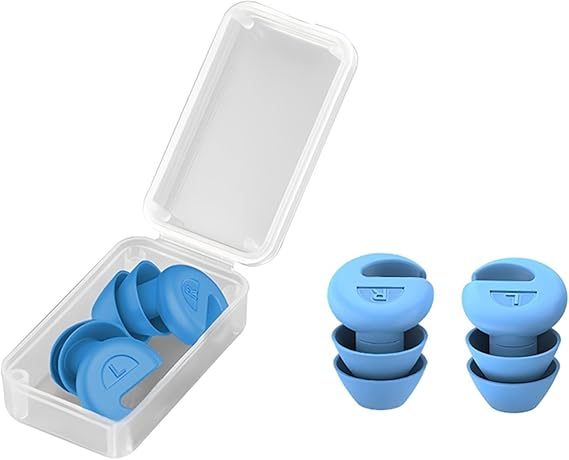
Best Earplugs for Sleeping Next to a Snoring Partner
Foam, putty and reusable plugs compared by fit and noise rating — for side and back sleepers.
Read the guide →
Five small things, one pouch, no overhead-bin rummaging at 2 a.m. Here is what earns its place — and what to leave behind.
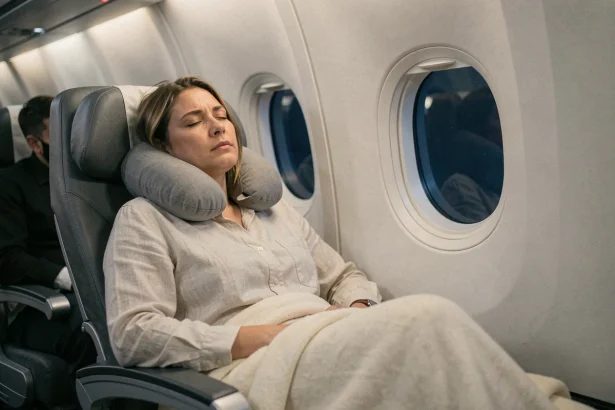
Direct answer: A carry-on sleep kit for overnight flights needs five things: a contoured sleep mask, earplugs, a light travel blanket, an inflatable footrest and neck support you can actually sleep against. Pack them in one pouch in your personal item, put the mask and earplugs on after takeoff, and keep the kit reachable without opening the overhead bin.
Sleeping on an overnight flight is mostly a packing problem. The cabin gives you light, noise, dry air and a seat that was not designed for sleep — but every one of those has a small, cheap countermeasure that fits in a pouch in your personal item.
This guide builds the kit piece by piece: what to pack, how to use each item, and how to time sleep around the flight. For neck support specifically, our travel pillow guide compares fifteen options in depth.
| Kit item | What it does | Packing tip |
|---|---|---|
| Contoured sleep mask | Blocks cabin light without pressing on eyes | Test it at home; flat masks slip on side sleepers |
| Earplugs | Cuts engine and cabin noise | Pack two pairs; foam blocks most, silicone is comfier |
| Light travel blanket | Warmth without airline-blanket bulk | Doubles as a lumbar roll when folded |
| Inflatable footrest | Raises feet so legs can relax | Check your airline’s policy before packing it |
| Neck support | Stops the head-drop that wakes you | Choose a shape you can lean into, not just wear |
| One pouch | Keeps the kit reachable in the dark | Personal item, not the overhead bin |
The overnight-flight sleep kit at a glance
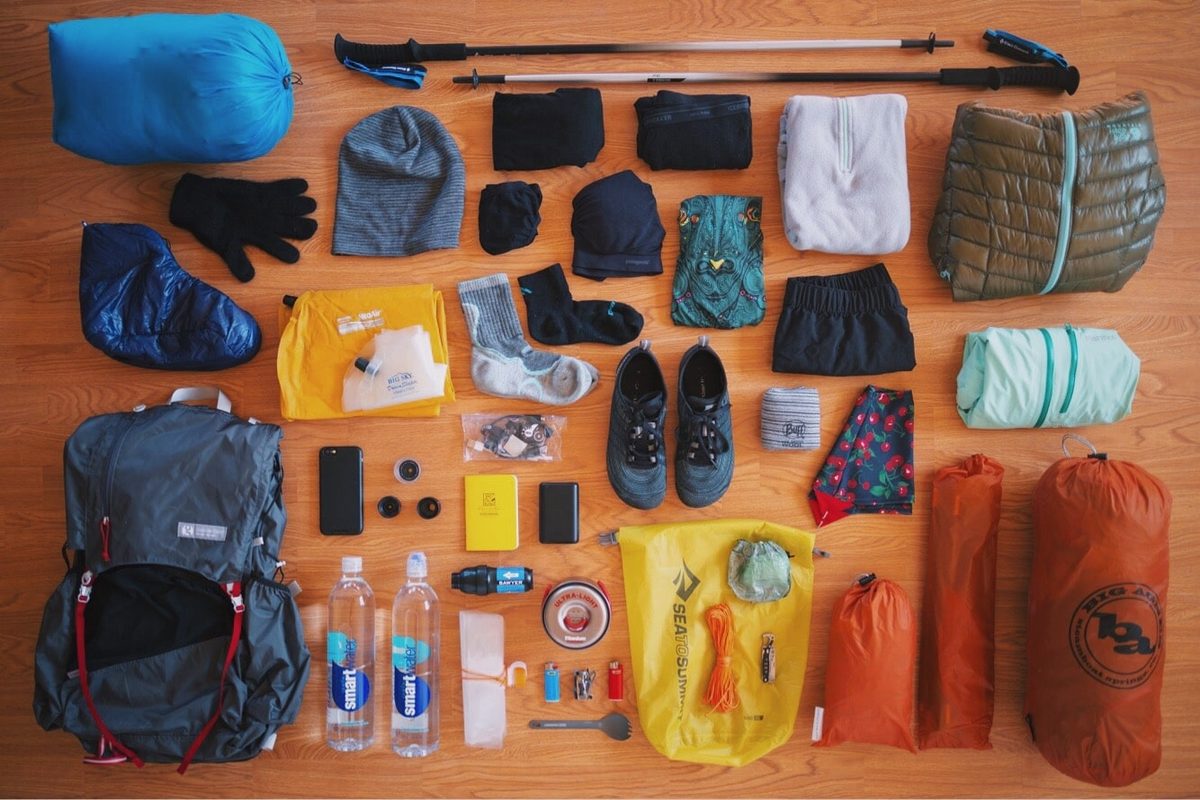
Pack five things in one pouch: a sleep mask, earplugs, a light blanket, an inflatable footrest and your neck support. Everything should fit in your personal item, because a kit in the overhead bin is a kit you will not use at 2 a.m.
Lay the kit out the night before, the way you would lay out clothes. If an item does not earn its place on a short test at home — a mask that slips, earplugs that ache — it will not earn it at altitude either.

Sleep normally the night before; do not try to bank sleep or deliberately stay up to be tired. Arriving at the airport exhausted makes the flight feel longer and the first day at your destination harder.
Instead, plan your sleep window on board. On most overnight flights the quietest stretch comes after the first meal service, so aim to be masked, plugged and settled by then rather than trying to sleep through boarding and takeoff.
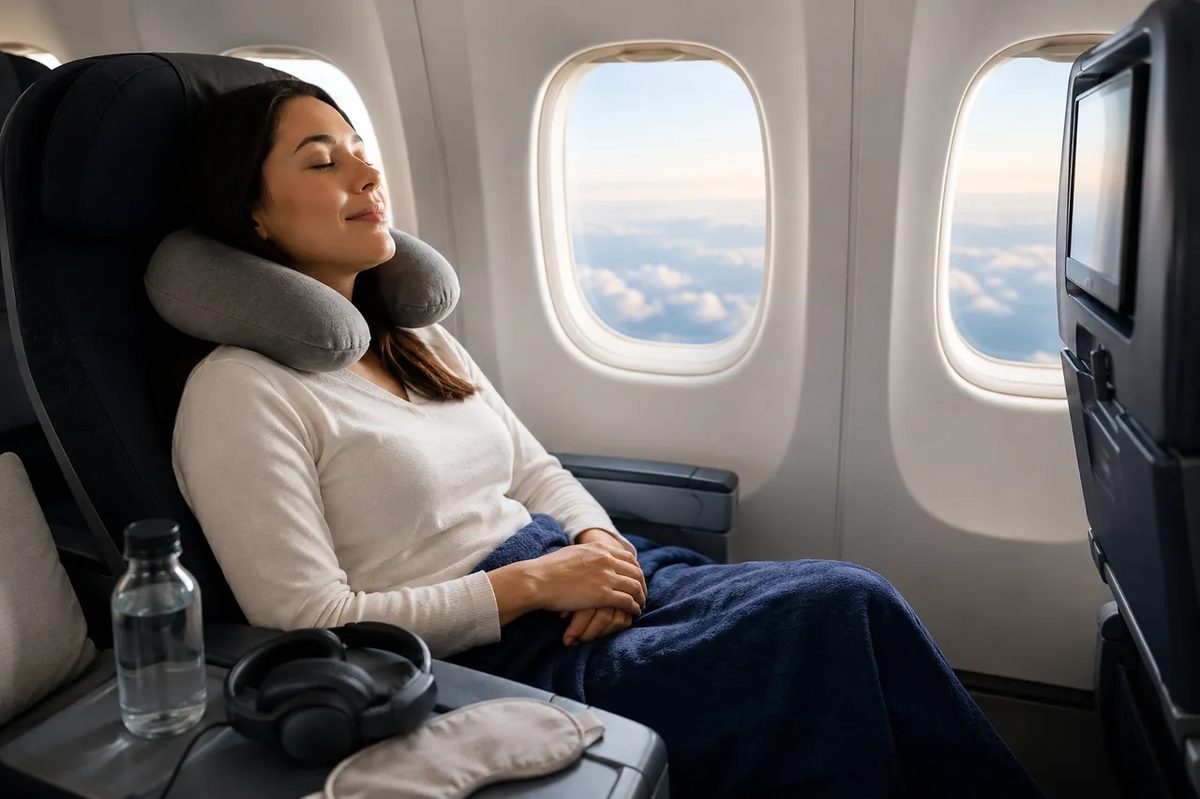
Choose a window seat if you can. It gives you a wall to lean against, keeps aisle traffic and trolley bumps away from your shoulder, and nobody needs to climb over you to reach the bathroom.
Sit as far from the galleys and lavatories as your fare allows — they are the cabin’s light and noise sources. A seat map check takes a minute and matters more than any single item in the pouch.
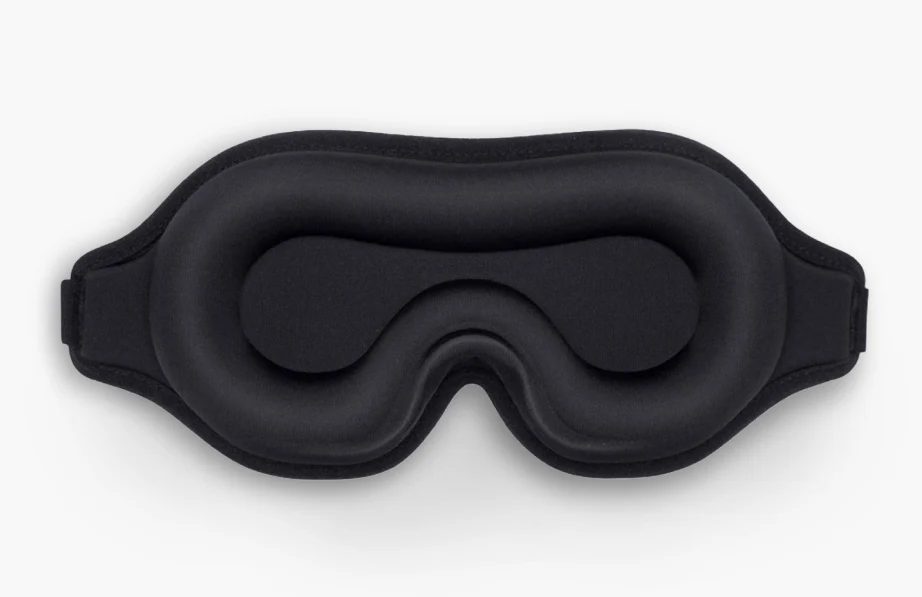
Use a contoured sleep mask with molded eye cups. It blocks light without pressing on your eyelids, which is what makes flat masks uncomfortable after an hour and useless if you wear makeup or have long lashes.
Test the strap at home: it should stay put when you turn your head, without a buckle digging in where your head meets the headrest. A mask that slips off in your own bed will not survive a flight.
Earplugs are the highest-value item in the kit. Foam plugs block the most noise; soft silicone plugs trade a little blocking for comfort against the headrest. Pack two pairs so a dropped plug does not end the plan.
If your bigger noise problem is at home rather than on board, our earplug guide for sleeping next to a snoring partner compares foam, putty and reusable plugs by fit and noise rating.
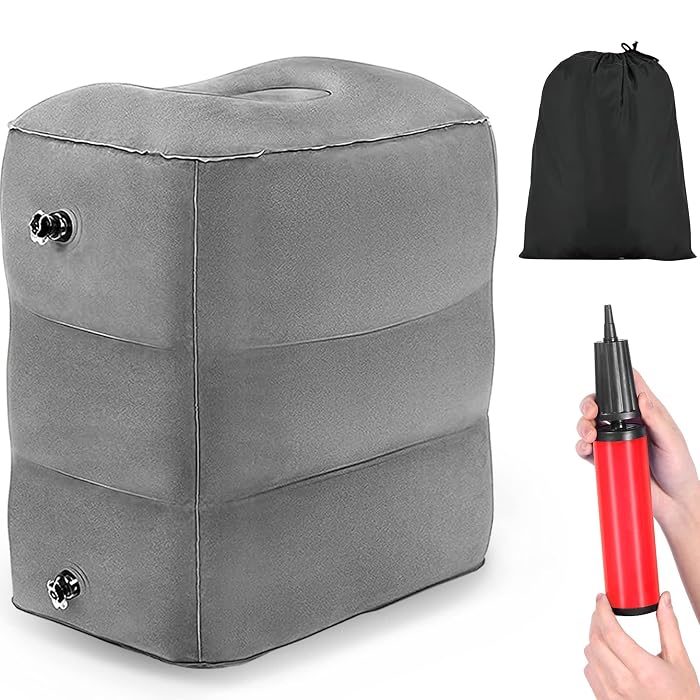
An inflatable footrest raises your feet so your legs can relax instead of dangling or bracing against the seat in front. Inflate it only partway — a soft, low platform is more comfortable than a firm block.
Check your airline’s policy before you pack one, because rules on inflatable footrests vary and crew can ask you to put it away. If yours is not allowed, a soft bag under your feet is the fallback.

Pack a light travel blanket rather than relying on the airline’s. Cabins run cold at cruising altitude, and your own blanket is there from boarding instead of after the first service round.
Folded, the same blanket works as a lumbar roll behind your back or a cushion under your elbows. One item doing two jobs is exactly what a carry-on kit should be built from.
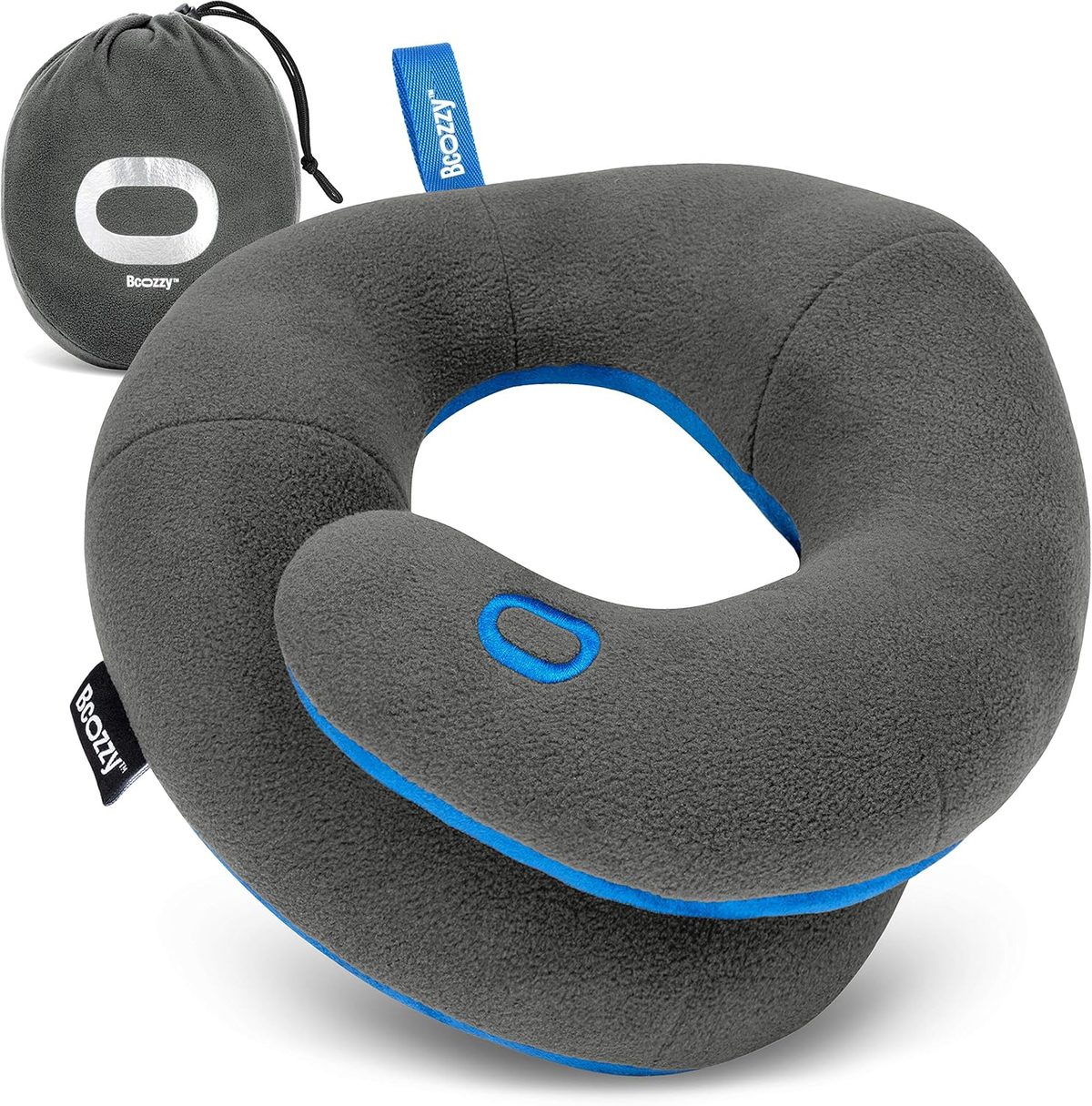
Choose neck support you can lean into, not just wear. A U-shaped pillow supports the chin and sides of the head; wrap and scarf styles suit people who sleep leaning forward or against the window.
Our travel pillow guide compares fifteen designs by how they actually hold a sleeping head, including the ones that pack smallest. Whatever you choose, test it in a chair at home before it earns pouch space.

Get outside into daylight soon after landing and keep moving until local evening. Light and activity are the two strongest signals for shifting your body clock, and both are free.
Avoid a long nap on arrival day. If you must sleep, keep it short and early, then get back outside — a three-hour afternoon nap is the reliable way to be wide awake at 3 a.m. local time.
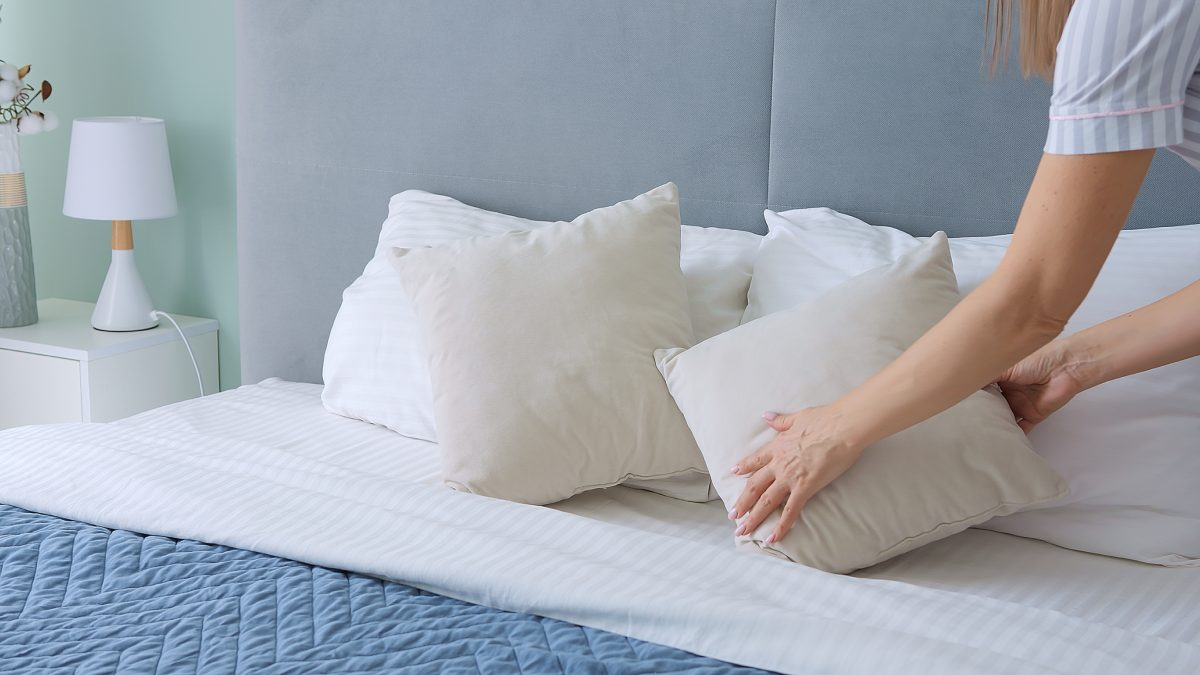
Your kit works at the destination too. The mask and earplugs handle a bright or noisy hotel room, and the blanket adds a layer if the room runs cold — the same problems as the cabin, in a different shape.
Make the room dark and cool before bed, keep your wake time steady for the first two mornings, and let the flight kit retire to your bag. The goal was never perfect sleep; it was arriving functional.
Mask, earplugs, blanket, footrest and neck support in one pouch in your personal item — that is the whole system. Put it on after takeoff, sleep through the quiet stretch after the first meal service, and get into daylight after landing. Five small things, used at the right moments, beat any single expensive travel gadget.
Usually, but policies vary by airline and crew can ask you to stow it. Check your airline’s rules before packing, and keep a soft bag as a fallback footrest.
Yes. A contoured mask blocks light at the edges where a hood leaks it, and it stays in place when you turn your head. A hood is a backup, not a plan.
Earplugs for sleep: they stay comfortable against a headrest and need no battery. Headphones are better for entertainment and worse for leaning sideways.
After takeoff, once the seatbelt sign is off and you have settled. Aim to be fully set up before the cabin lights dim after the first meal service.
Window. You get a wall to lean on and nobody climbs over you. The aisle suits people who get up often, which is the opposite of sleeping.
No. Sleep normally and plan your sleep window on board. Arriving exhausted makes both the flight and the first day at your destination worse.
Personal item, under the seat. A kit in the overhead bin means standing up, opening the bin and waking yourself fully at the exact moment you want to sleep.
Foam, putty and reusable plugs compared by fit and noise rating — for side and back sleepers.
Read the guide →Fifteen travel pillows, from scarf supports to ultralight camp pillows, ranked by real sleep.
Read the guide →
Cold air, stretch and the valve: the three real causes of a soft air mattress by morning.
Read the guide →