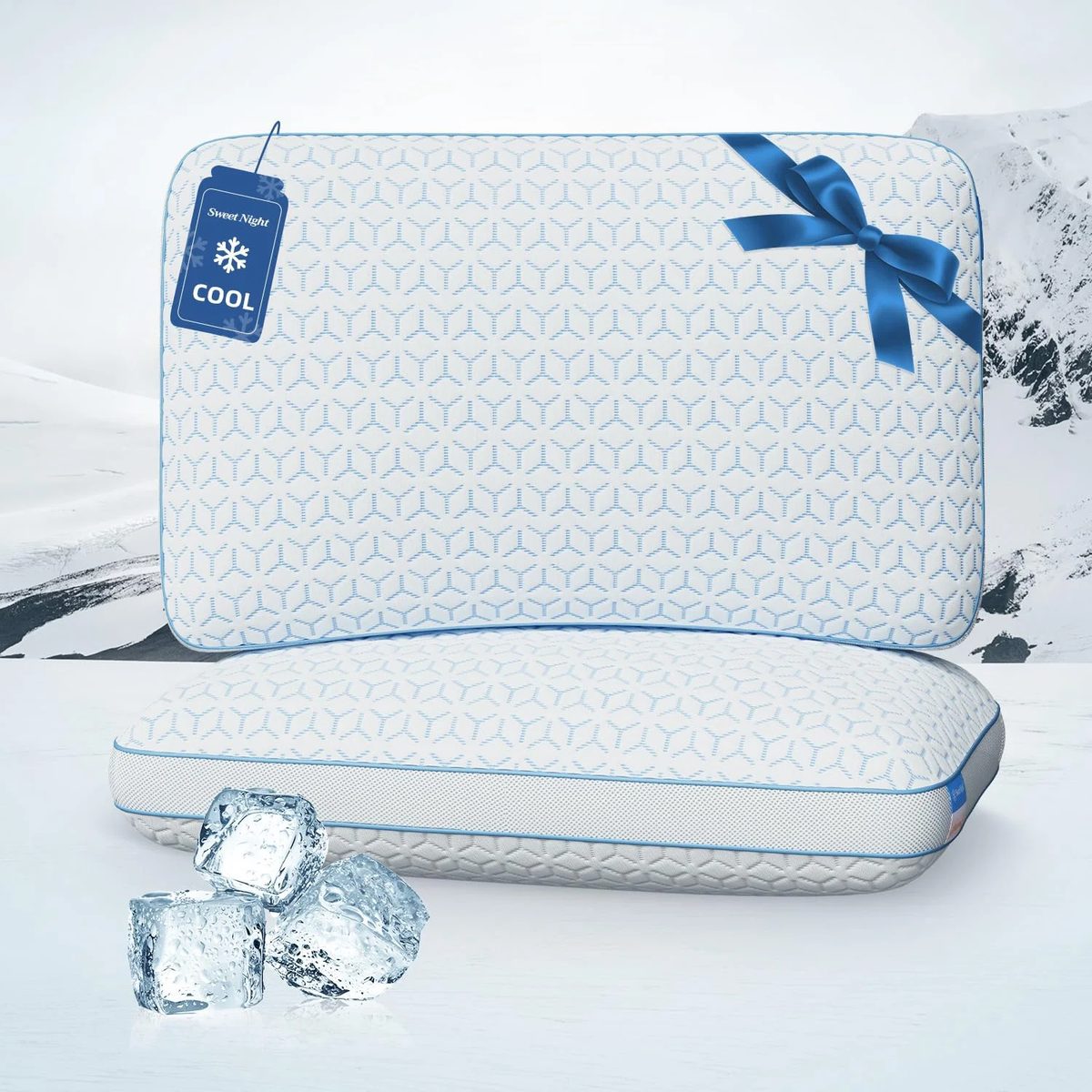
Pillows
Best Cooling Pillows for Hot Sleepers
Fifteen cooling pillows, ranked by how they actually handle heat — not by marketing claims.
Read the guide →
The shoulder gap decides everything. Measure it once, and you'll never buy the wrong pillow again.

Side sleeping is the most common sleep position and the hardest to get right with a pillow. The problem is simple geometry: when you lie on your side, there is a gap between your ear and the mattress as wide as your shoulder. Your pillow has to fill that gap exactly — too low and your neck bends down all night, too high and it bends up.
This guide shows you how to measure your gap, what loft to look for, which fills hold up under a side sleeper's weight, and a 30-second alignment test you can do tonight with the pillow you already own.
Direct answer: Measure the gap between your ear and the mattress, then match the pillow loft to it: roughly 10–12 cm for narrow shoulders, 12–14 cm for average shoulders and more for broad shoulders. An adjustable or firm latex pillow holds that height best.
| Shoulder width | Suggested loft | Best fill types |
|---|---|---|
| Narrow (under 40 cm) | 10–12 cm | Adjustable shredded foam, latex |
| Average (40–48 cm) | 12–14 cm | Adjustable foam, memory foam, latex |
| Broad (over 48 cm) | 14–17 cm | Firm latex, tall adjustable, contoured foam |
Loft guide by shoulder width
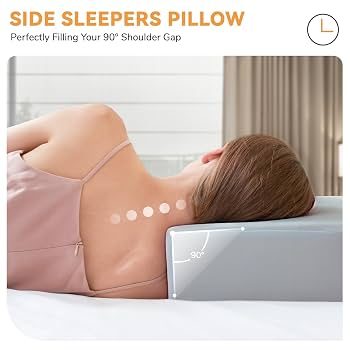
Lie on your side and look in a mirror, or ask someone to look: your head should sit level with your spine, in one straight line from the top of your head to your tailbone. The distance from the side of your head to the mattress is your shoulder gap, and it is usually 10 to 17 centimeters depending on your build.
A pillow that is too thin lets your head drop toward the mattress; too thick pushes it up toward the ceiling. Both bend the neck for hours. That is why 'medium loft' labels mean so little — the right loft is a measurement, not a marketing word.

Stand against a wall and measure from the wall to the outer edge of your shoulder — that is your shoulder width, and it is a good proxy for the loft you need. Then measure your current pillow: lay it flat, press it gently as your head would, and measure the height at the center.
If the numbers are close, your pillow is probably fine and the problem is firmness or fill. If your pillow is 5 cm shorter than your shoulder width, no amount of fluffing will fix it — you need a taller pillow.

For side sleepers, firmness matters because of compression: a soft pillow that measures 14 cm on the shelf may compress to 8 cm under your head, which puts you right back to a bent neck. Firmer fills — latex, dense foam, tightly packed shredded foam — hold their loft under load.
That does not mean 'firm' is always right. A very firm pillow can press on the ear and jaw. The sweet spot for most side sleepers is medium-firm: enough structure to hold the gap, enough give to be comfortable. Adjustable pillows are the easiest way to find it — add fill until the gap closes, then stop.
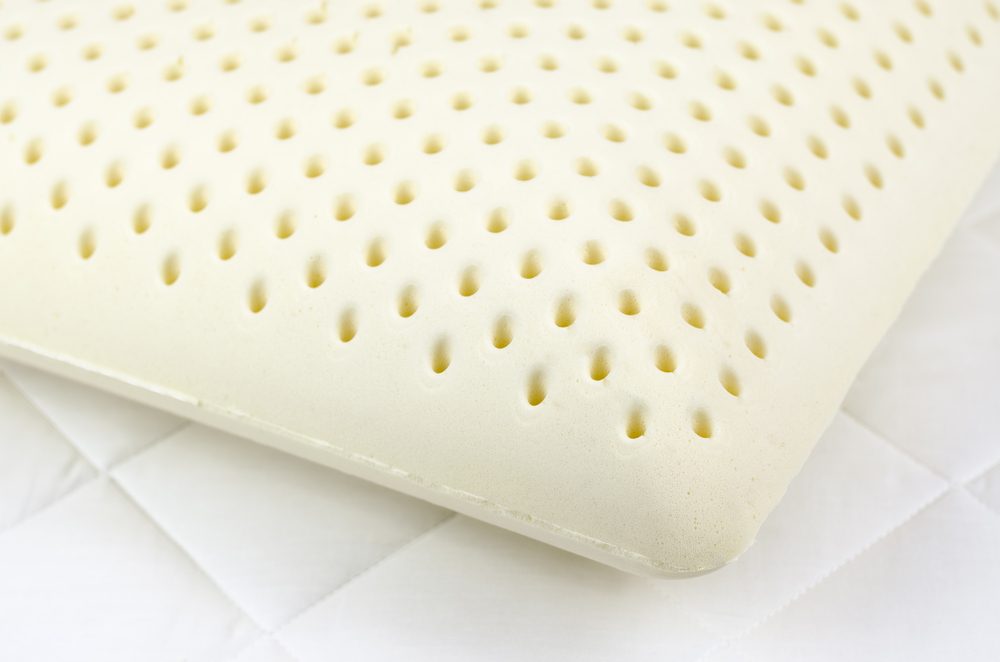
Latex is the side sleeper's quiet favorite. It is naturally springy, so it pushes back just enough to hold the head level without feeling hard, and the pin-core holes keep air moving — latex sleeps cooler than memory foam. It also holds its shape for years rather than flattening in months.
The downsides: latex pillows are heavier, cost more, and have a faint natural scent when new. If you are allergic to latex, skip it entirely — shredded foam adjustable pillows are the safer equivalent.
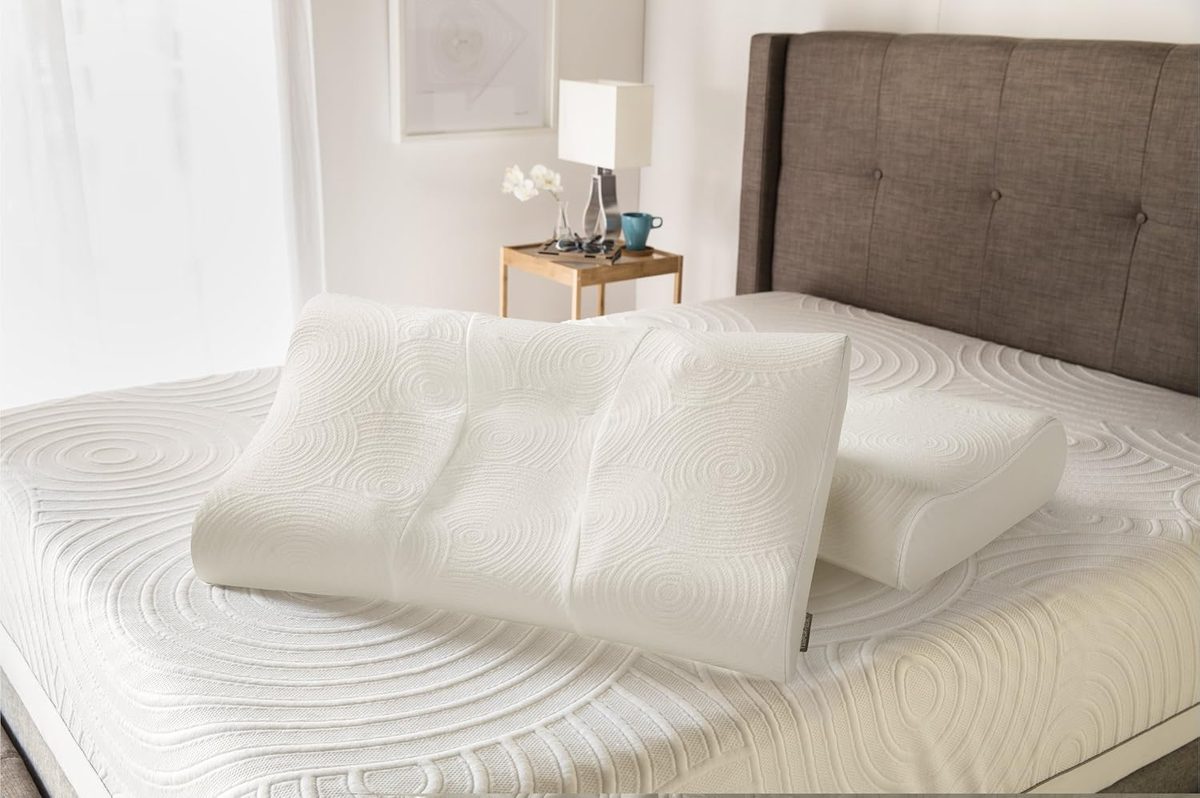
Memory foam's slow contouring feels wonderful for the first hour — it molds around the ear and jaw and spreads pressure evenly. The catch is heat and sink: solid memory foam traps warmth, and over the night it softens under body heat and loses a centimeter or two of loft.
Contoured memory foam pillows (with a curved neck roll) work well for side sleepers who stay in one position. Combination sleepers who roll between side and back usually do better with shredded or adjustable fills.

If you are unsure of your loft, buy adjustable. Shredded foam and microfiber pillows let you add or remove fill until the gap closes — and change it again if your mattress or sleep position changes. It is the only pillow type that forgives a wrong guess.
The trade-off is maintenance: shredded fill settles and needs refluffing, and the pillow needs a washable cover because you will be opening it to adjust. Look for pillows that include an extra fill bag — you will want it.
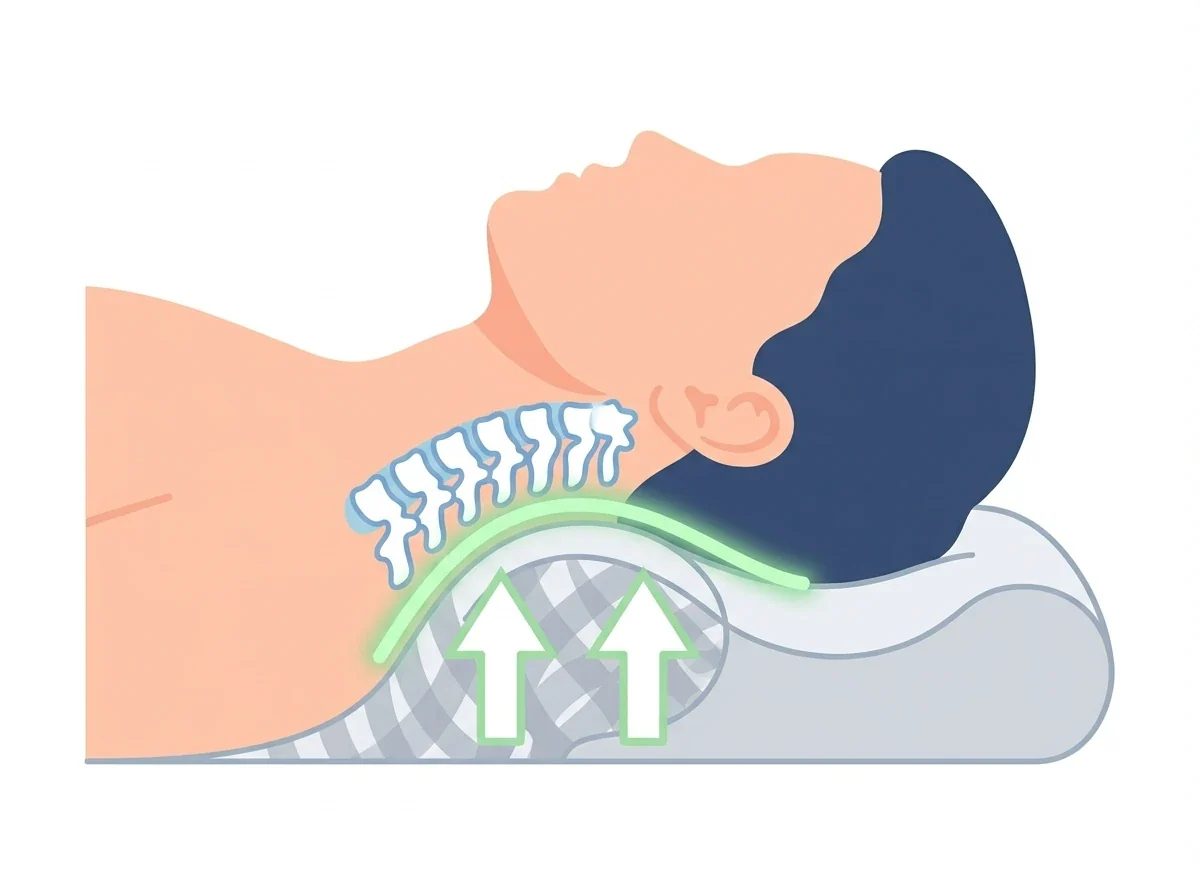
Lie on your side on your pillow and have someone look at you from the front, or prop your phone up and take a photo. Draw a mental line from your nose down through your chin, neck and spine. If the line is straight, your loft is right. If your head tilts down toward the mattress, you need more loft; if it tilts up, you need less.
Do the test after five minutes lying down, not immediately — foam and fill compress under your head, and the settled height is the one that matters.
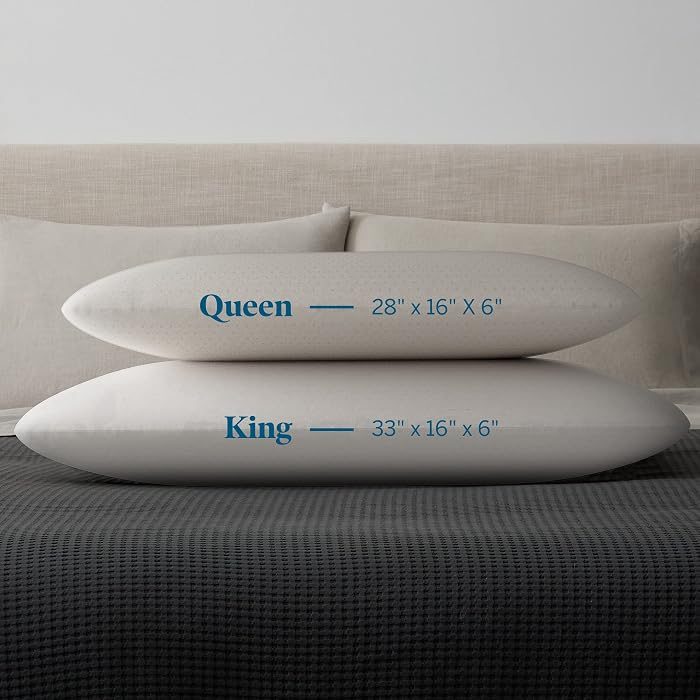
Side sleepers move more than back sleepers, and a standard pillow can leave the head hanging off the edge by 3 a.m. A queen or king pillow gives you room to shift without losing support — and if you hug a pillow or put one between your knees, the extra length helps there too.
The trade-off is bed space: two king pillows on a double bed leave little room for anything else. On a queen bed or larger, king pillows are the side sleeper's friend.

Give any new pillow two weeks before judging it — your neck needs time to adjust to a new loft, and the first nights can feel strange even when the pillow is right. The signs it is working: you stop waking to flip or punch the pillow, your arm stops going numb, and you wake without the stiff-neck ritual.
If after two weeks you are still waking sore, the loft is probably still wrong — adjust it if you can, or return the pillow and try the next size up or down. Most good pillow brands offer trial periods for exactly this reason.
Measure your shoulder, match the loft, and pick a fill that holds its height under your head. For most side sleepers, that means an adjustable pillow or a firm latex one — and a king size if your bed allows it. The full shortlist of pillows that meet this bar, including cooling options for hot side sleepers, is in our cooling pillow guide.
Next: Best Cooling Pillows for Hot Sleepers
Most side sleepers need 12–15 cm of loft, depending on shoulder width. Measure from the wall to the outer edge of your shoulder — that number is your target loft. Adjustable pillows let you fine-tune it.
Medium-firm is the usual sweet spot: firm enough to hold the shoulder gap under your head's weight, soft enough not to press on the ear and jaw. Very soft pillows compress too far and defeat the purpose.
It can be, especially contoured memory foam with a neck roll. The downsides are heat and gradual softening overnight. Shredded foam and latex hold their loft more consistently through the night.
A pillow that is too low lets your head press down on the shoulder and arm underneath. Raising the loft so the head sits level usually fixes it. If numbness persists, talk to a clinician.
Not necessarily special — but they do need the right loft and enough firmness to hold it. A standard soft pillow is the most common mistake side sleepers make.
Every 1–2 years for most fills, sooner if the pillow no longer springs back or holds its loft. See our guide on when to replace your pillow for the full signs.
Fifteen cooling pillows, ranked by how they actually handle heat — not by marketing claims.
Read the guide →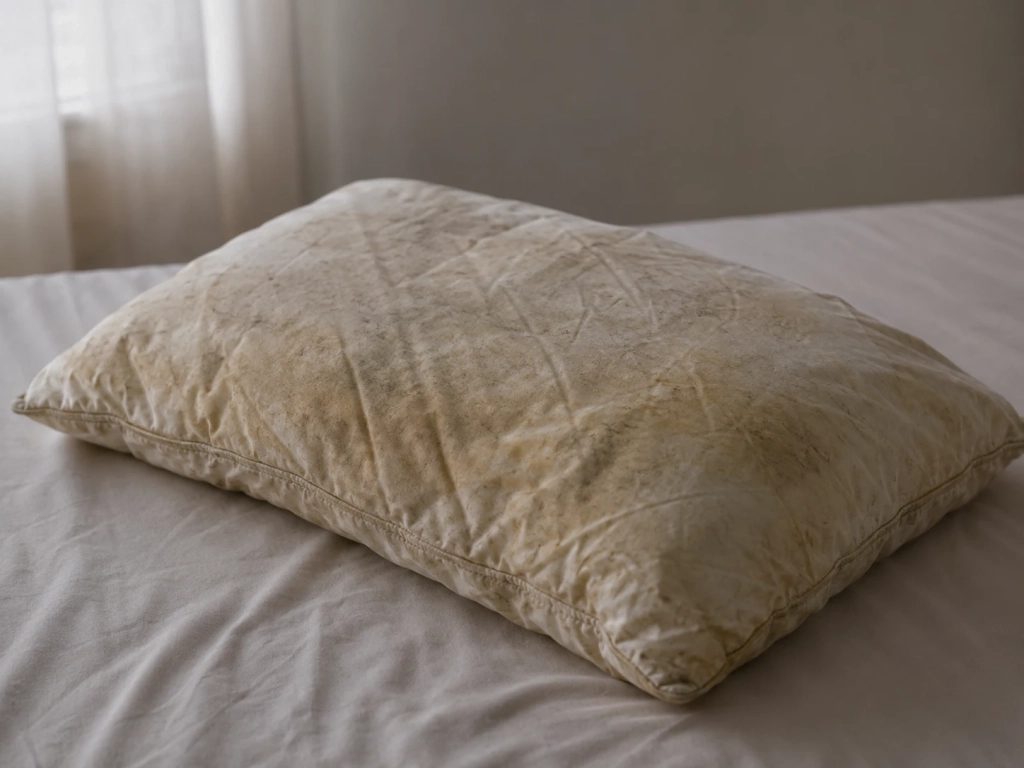
The short answer is 1–2 years. The honest answer depends on your pillow — here's how to tell.
Read the guide →
Most pillows can be washed — but memory foam can't, and drying matters more than washing. Here's the method for every fill.
Read the guide →